
July 09, 2026
A cracked bicycle frame is more than a manufacturing defect—it can compromise rider safety, shorten product lifespan,
and damage a brand’s reputation. For steel bicycle frame manufacturers, achieving durable, fatigue-resistant brazed joints
starts with selecting the right filler metal.
While welding techniques and operator experience certainly matter, many joint failures can be traced back to one
overlooked factor: using an unsuitable brazing alloy.
At XINXIN WELDING, we have worked closely with bicycle frame manufacturers for years and have seen the same
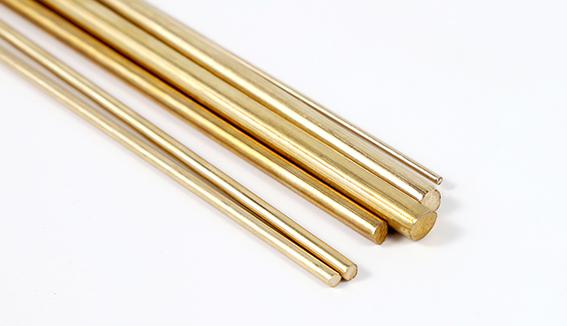
challenges repeated across production lines. That’s why we developed HS221 Brass Brazing Rod—a filler metal specifically
engineered for carbon steel bicycle frame brazing, delivering reliable joint strength, excellent flow characteristics, and consistent
production performance.
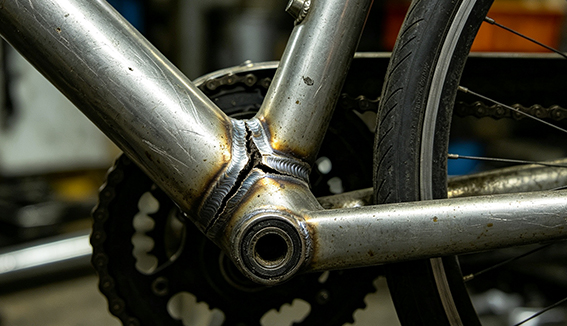
Why Do Bicycle Frame Brazed Joints Crack?
Steel bicycle frames experience continuous vibration, impact loading, and cyclic stress throughout their service life.
Unlike static metal structures, every ride subjects the frame joints to thousands of fatigue cycles.
When the wrong brazing material is used, microscopic cracks may begin to form long before they become visible. Over
time, these tiny defects propagate under repeated stress until joint failure occurs.
Several common causes include:
▶ Using phosphorus-copper brazing alloys on carbon steel
▶ Uneven heating during flame brazing
▶ Excessive local overheating
▶ Improper joint clearance
▶ Rapid cooling after brazing
▶ Poor surface preparation
▶ Inadequate filler metal flow
Fortunately, most of these problems can be prevented through proper material selection and process control.
Why Brass Brazing Rod Is the Industry Standard for Steel Bicycle Frames
Different brazing alloys are designed for different applications.
Phosphorus-copper alloys are excellent for copper-to-copper joints in HVAC and refrigeration systems but are unsuitable
for steel bicycle frames. Their phosphorus content can reduce joint ductility and increase brittleness when brazing steel.
Silver brazing alloys provide exceptional strength and low brazing temperatures. However, their significantly higher cost
makes them better suited for custom-built or premium handmade frames rather than large-scale production.
For most commercial steel frame manufacturers, brass brazing rods offer the best balance between mechanical
performance, appearance, productivity, and manufacturing cost.
Why Manufacturers Choose XINXIN WELDING HS221 Brass Brazing Rod
Superior Flow and Gap Filling
HS221 features an optimized copper-zinc-tin-silicon alloy composition that provides excellent capillary action during
brazing. The molten alloy flows smoothly into properly prepared frame joints, reducing the risk of incomplete filling, porosity,
and slag inclusion.
The result is cleaner joints and a more consistent production process.
Excellent Fatigue Resistance
Unlike ordinary brass filler metals, HS221 incorporates carefully balanced alloying elements that improve joint ductility
while helping reduce zinc evaporation during heating.
This produces brazed joints capable of withstanding the repeated vibration and cyclic loading encountered during
everyday riding.
Attractive Brazed Appearance
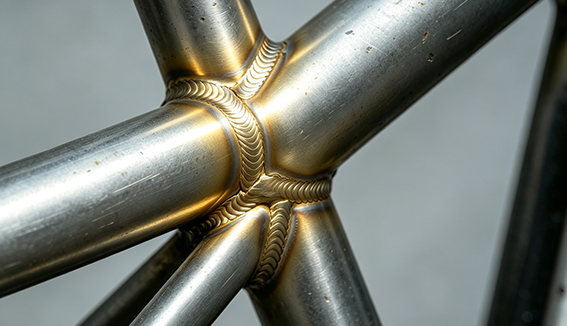
A smooth, uniform fillet not only enhances structural integrity but also reduces post-brazing grinding and polishing time.
After finishing, the golden-colored brazed joints provide an attractive appearance that is especially valued on classic
lugged steel bicycle frames.
Designed for Efficient Production
HS221 works with conventional borax-based brazing fluxes and standard oxy-acetylene equipment without requiring
specialized machinery.
Whether operating a small custom frame workshop or a high-volume production facility, manufacturers can achieve
stable and repeatable brazing quality.
Recommended Brazing Procedure
Consistent brazing quality depends on following correct production procedures.
Surface Preparation
Remove rust, oil, paint, and oxidation from all joint surfaces before brazing. Clean metal surfaces allow proper wetting
and stronger metallurgical bonding.
Accurate Joint Fit-Up
Maintain an appropriate joint clearance throughout the frame assembly. Excessive gaps require unnecessary filler
metal, while overly tight joints restrict capillary flow.
Apply Flux Correctly
Use a thin, even layer of brazing flux. Excessive flux may produce spatter and increase cleaning time after brazing.
Use a Neutral Oxy-Acetylene Flame
A neutral flame minimizes oxidation while providing stable heating. Avoid oxidizing flames that darken the steel surface
and carburizing flames that may contaminate the joint.
Heat the Base Metal—Not the Rod
The brazing rod should melt from the heat stored in the steel frame rather than from direct flame contact. Once the
base metal reaches brazing temperature, feed the HS221 rod into the joint and allow capillary action to distribute the molten
alloy naturally.
Allow Natural Cooling
After brazing, let the frame cool naturally to room temperature. Rapid quenching can introduce residual stress that may
later contribute to cracking.
Common Brazing Problems and Practical Solutions
Problem: Porosity
Possible Causes
▶ Dirty joint surfaces
▶ Uneven heating
▶ Excessive flux application
Solution
Thoroughly clean the steel, apply a thin layer of flux, and ensure uniform heating before feeding the filler metal.
Problem: Cracks After Riding
Possible Causes
▶ Incorrect filler metal selection
▶ Local overheating
▶ Water quenching
Solution
Replace unsuitable filler materials with HS221 Brass Brazing Rod, maintain even heating throughout the joint, and
allow the frame to cool naturally.
Problem: Poor Filler Metal Flow
Possible Causes
▶ Insufficient preheating
▶ Incorrect flame adjustment
Solution
Increase overall joint temperature before feeding the rod, allowing the molten alloy to flow freely by capillary action.
Problem: Dark or Oxidized Brazed Joints
Possible Causes
▶ Oxidizing flame
▶ Excessive oxygen supply
Solution
Adjust the torch to produce a neutral flame and avoid prolonged heating in one area.
Why Partner with XINXIN WELDING?
At Tongling Xinxin Welding Materials Co., Ltd., we understand that producing reliable bicycle frames requires more
than simply supplying brazing rods.
Our technical team works with manufacturers to optimize brazing procedures, improve joint quality, and reduce production
defects. In addition to supplying HS221 Brass Brazing Rod, we provide:
▶ Sample evaluation for production trials
▶ Technical guidance for brazing process optimization
▶ Stable bulk supply with consistent product quality
▶ Custom packaging and OEM services
▶ Professional support for international bicycle frame manufacturers
Today, XINXIN WELDING products are trusted by customers across China and exported to Southeast Asia, South
America, and other global bicycle manufacturing markets.
Conclusion
Strong bicycle frames begin with strong brazed joints.
Choosing the correct brazing alloy is one of the simplest and most effective ways to improve product reliability, reduce
rework, and enhance long-term riding safety.
With excellent flow characteristics, high joint toughness, attractive appearance, and dependable production performance,
XINXIN WELDING HS221 Brass Brazing Rod is an ideal solution for modern steel bicycle frame manufacturing.
If you’re looking to improve brazing quality, reduce joint failures, or optimize your production process, our engineering
team is ready to help you find the right solution.